-

AIXTRON SE supports Nexperia B.V. in the ramp-up of its 200mm volume production for silicon carbide (SiC) and gallium nitride (GaN) power devices. With the new G10-SiC for the 200mm SiC volume ramp, Nexperia is placing a repeat order for AIXTRON SiC tools. This is complemented by an order for AIXTRON G10-GaN tools.
Both GaN and SiC epitaxial films are essential for the design of next-generation energy-efficient Field-Effect (FET) or Metal-Oxide-Field Effect (MOSFET) transistors to be used in various power conversion applications ranging from data centers and solar inverters in electric vehicles (EV) or trains.
Nexperia has decades of experience in the development of power devices, achieving more than 2.1 billion USD in revenue in 2023. After releasing its first GaN FET device in 2019 and its first SiC MOSFET in 2023, Nexperia continues to expand its portfolio with new high-reliability and power-efficient devices.
Nexperia, headquartered in Nijmegen (Netherlands), operates front-end factories in Hamburg (Germany) and Greater Manchester (England). The AIXTRON epitaxy systems will be installed at Nexperia’s wafer fab in Hamburg (Germany), further strengthening the semiconductor production capabilities in the region. Nexperia’s Hamburg site produces approximately 100 billion discrete semiconductors annually, accounting for about a quarter of the global production of this type of products.
“We are honored to strengthen our alliance with Nexperia, a pivotal player in the semiconductor landscape. Our G10 epitaxy solutions are at the heart of this collaboration, bolstering Nexperia’s growth strategies and enabling the high-volume production of wide bandgap semiconductors for commercial applications. Together, we are setting the pace for the industry’s transition to more energy-efficient SiC and GaN solutions”, said Dr. Felix Grawert, CEO and President of AIXTRON SE.
“As we advance our technological capabilities and market presence in high-power semiconductor production, our strategic partnership with AIXTRON is transformative. Integrating the G10 systems will significantly enhance our wide bandgap technology development and production capabilities. We build on AIXTRON’s proven uniformity and leverage the additional productivity gains of AIXTRON’s G10 tools to scale up our production efficiently and cost-effectively. With the new G10 tools in our Hamburg facility, we are poised for further advancements in our production capabilities,” said Achim Kempe, COO at Nexperia B.V.
Original – AIXTRON
-

Nexperia released 650V ultra- and hyperfast recovery rectifiers in D2PAK Real-2-Pin (R2P) packaging for use in various automotive, industrial and consumer applications including charging adapters, photovoltaic (PV), inverters, servers and switched mode power supplies (SMPS).
Combining planar die technology with a state-of-the-art junction termination (JTE) design, these rectifiers offer high power density, fast switching times with soft recovery and excellent reliability. They are encapsulated in a D2PAK Real-2-Pin Package (SOT8018), which offers the same package outline as the standard D2PAK package but has only two pins instead of three (the middle cathode pin has been removed). This increases the pin-to-pin distance from 1.25mm to over 4mm, which allows to meet the creepage and clearance requirements stated in the IEC 60664 standard.
“These recovery rectifiers further demonstrate Nexperia’s expertise in the field of semiconductor device packaging” according to Frank Matschullat, Head of Product Group Power Bipolar Discretes at Nexperia. “By taking the innovative step of removing the cathode pin from a standard D2PAK package, Nexperia has created a Real-2-Pin package that can meet the creepage and clearance requirements, in particular for high voltage automotive applications.”
Original – Nexperia
-
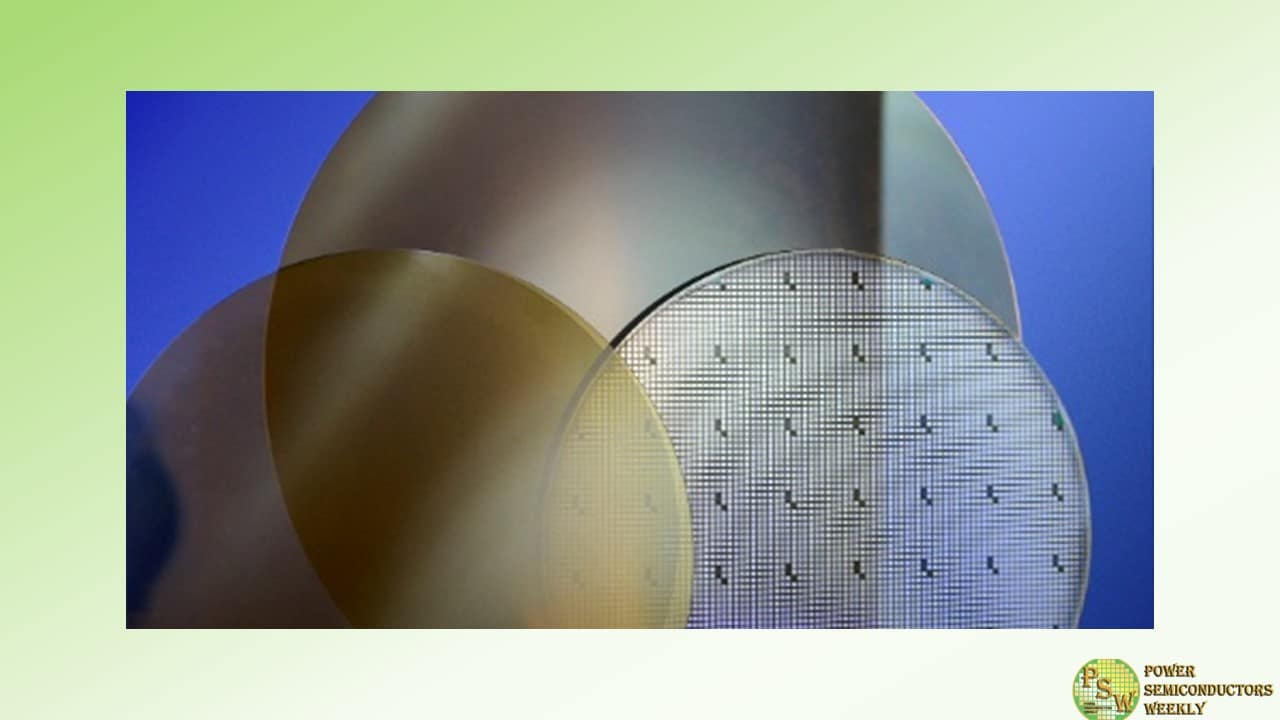
Semiconductor manufacturer Nexperia announced plans to invest USD 200 million (appx. 184 million Euros) to develop the next generation of wide bandgap semiconductors (WBG) such as silicon carbide (SiC) and gallium nitride (GaN), and to establish production infrastructure at the Hamburg site. At the same time, wafer fab capacity for silicon (Si) diodes and transistors will be increased. The investments are jointly announced with Hamburg’s Minister for Economic Affairs, Dr. Melanie Leonhard, on the occasion of the 100-year anniversary of the production site.
To meet the growing long-term demand for efficient power semiconductors, all three technologies (SiC, GaN, and Si) will be developed and produced in Germany starting in June 2024. This means Nexperia is supporting key technologies in the fields of electrification and digitalization. SiC and GaN semiconductors enable power-hungry applications, such as data centers, to operate with exceptional efficiency and are core building blocks for renewable energy applications and electromobility. These WBG technologies have great potential and are increasingly important for achieving decarbonization goals.
“This investment strengthens our position as a leading supplier of energy-efficient semiconductors and enables us to utilize available electrical energy more responsibly,” comments Achim Kempe, COO and managing director at Nexperia Germany. “In the future, our Hamburg fab will cover the complete range of WBG semiconductors while still being the largest factory for small signal diodes and transistors. We remain committed to our strategy of producing high-quality, cost-efficient semiconductors for standard applications and power-intensive applications, while addressing one of the greatest challenges of our generation: meeting the growing demand for energy and while reducing the environmental footprint.”
First production lines for high-voltage GaN D-Mode transistors and SiC diodes started in June 2024. The next milestone will be modern and cost-efficient 200 mm production lines for SiC MOSFETs and GaN HEMTs. These will be established at the Hamburg factory over the next two years. At the same time, the investment will help to further automate the existing infrastructure at the Hamburg site and expand silicon production capacity by systematically converting to 200 mm wafers. Following the expansion of the clean room areas, new R&D laboratories are being built to continue to ensure a seamless transition from research to production in the future.
In addition to advancing technology, the semiconductor supplier expects the initiative to stimulate local economic development. The investments make an important contribution to securing and creating jobs and enhancing the European Union’s semiconductor self-sufficiency. Nexperia works closely with universities and research institutes to benefit from each other’s expertise and promote highly qualified employee training. Nexperia relies on a robust research and development ecosystem in Hamburg and throughout Europe. Development partnerships and co-operations, e.g. in the field of GaN technology as part of the Industrial Affiliation Program (IIAP) of the nanoelectronics research center imec, play a crucial role. These and other collaborations ensure continuous innovation and technological excellence in Nexperia’s products.
“The planned investment enables us to bring WBG chip design and production to Hamburg. However, SiC and GaN are by no means new territory for Nexperia. GaN FETs have been part of our portfolio since 2019, and in 2023 we expanded our range of products to include SiC diodes and SiC MOSFETs, the latter in collaboration with Mitsubishi Electric. Nexperia is one of the few suppliers to offer a comprehensive range of semiconductor technologies, including Si, SiC, and GaN in both e-mode and d-mode. This means, we offer our customers a one-stop shop for all their semiconductor needs”, explains Stefan Tilger, CFO and managing director at Nexperia Germany.
The investment is yet another milestone in the 100-year history of Nexperia’s production site in Hamburg-Lokstedt. Since the foundation of Valvo Radioröhrenfabrik in 1924, the site has continuously developed and today supplies around a quarter of the global demand for small signal diodes and transistors. Since its spin-off from NXP in 2017, Nexperia has invested substantial sums in the Hamburg site, increased the workforce from 950 to around 1,600 and brought the technological infrastructure up to the state-of-the-art. This continued expenditure underlines the company’s commitment to remaining at the forefront of the industry and providing innovative solutions to its customers worldwide.
Original – Nexperia
-

Nexperia announced that its class-leading 650 V, 10 A silicon carbide (SiC) Schottky diode is now automotive qualified (PSC1065H-Q) and available in real-two-pin (R2P) DPAK (TO-252-2) packaging, making it suitable for various applications in electric vehicles and other automobiles.
Additionally, in a further extension to its portfolio of SiC diodes, Nexperia is now also offering industrial-grade devices with current ratings of 6 A, 16 A, and 20 A in TO-220-2, TO-247-2, and D2PAK-2 packaging to facilitate greater design flexibility. These diodes address the challenges of demanding high voltage and high current applications including switched-mode power supplies, AC-DC and DC-DC converters, battery-charging infrastructure, motor drives, uninterruptible power supplies as well as photovoltaic inverters for sustainable energy production.
The merged PiN Schottky (MPS) structure of these devices provides additional advantages over similar competing SiC diodes, including outstanding robustness against surge currents. This eliminates the need for additional protection circuitry, thereby significantly reducing system complexity and enabling hardware designers to achieve higher efficiency with smaller form factors in rugged high-power applications. Nexperia’s consistent quality across various semiconductor technologies provides designers with confidence in the reliability of these diodes.
In addition, Nexperia’s ‘thin SiC’ technology delivers a thinner substrate (one-third of its original thickness) which dramatically reduces the thermal resistance from the junction to the back-side metal. This results in lower operating temperature, higher reliability and device lifetime, higher surge current capability, and lower forward voltage drop.
“We’ve seen an excellent market response to the initial release of our SiC diodes. They have proven themselves in design-ins with one notable example in power supplies for industrial applications, where customers have achieved especially good results. The superior reverse recovery of these diodes translates to high efficiency in real-world use”, says Katrin Feurle, Senior Director and Head of Product Group SiC Diodes & FETs at Nexperia. “We are particularly excited that this is our first automotive-qualified product, and it is already recognized by major automotive players for its performance and reliability.”
Original – Nexperia
-
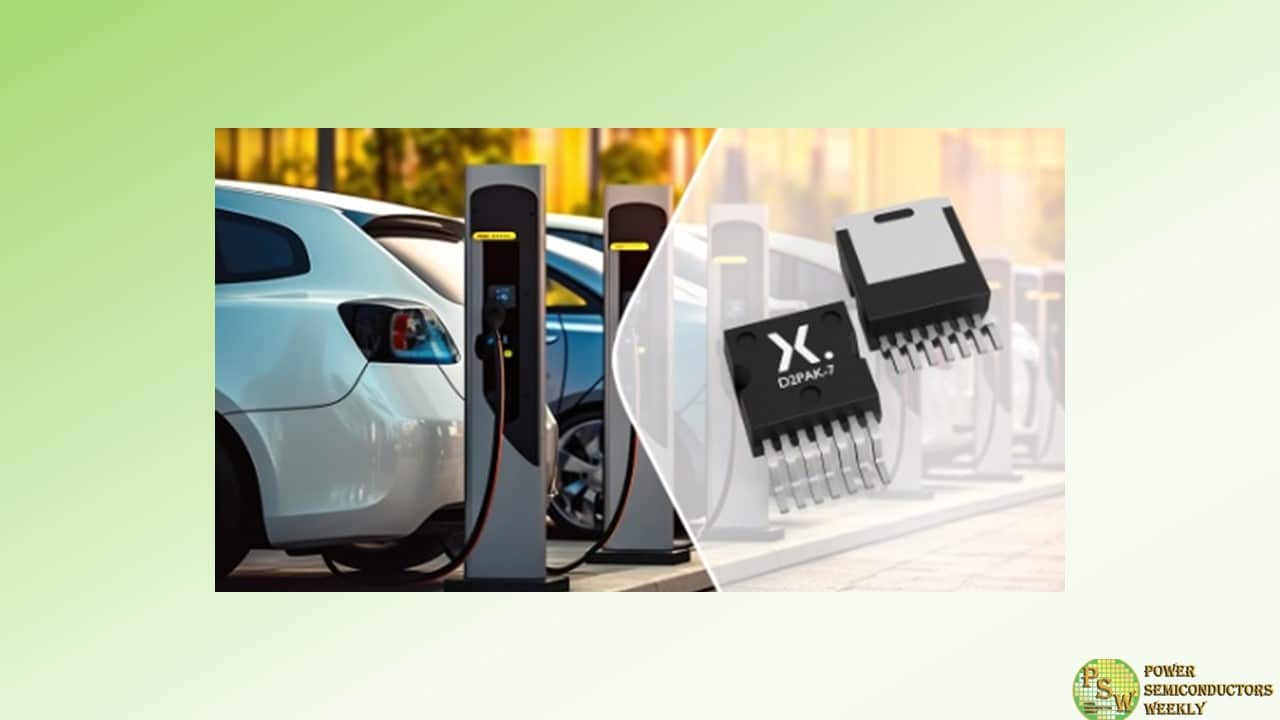
Nexperia announced that it is now offering its industry leading 1200 V silicon carbide (SiC) MOSFETs in D2PAK-7 surface mount device (SMD) packaging, with a choice of 30, 40, 60, and 80 mΩ RDSon values. This announcement follows on from Nexperia’s late-2023 release of two discrete SiC MOSFETs in 3 and 4-pin TO-247 packaging and is the latest offering in a series which will see its SiC MOSFET portfolio swiftly expand to include devices with RDSon values of 17, 30, 40, 60 and 80 mΩ in flexible package options.
With the release of the NSF0xx120D7A0, Nexperia is addressing the growing market demand for high performance SiC switches in SMD packages like D2PAK-7, which is becoming increasingly popular in various industrial applications including electric vehicle (EV) charging (charge pile, offboard charging), uninterruptible power supplies (UPS) and inverters for solar and energy storage systems (ESS).
It is also further testimony to Nexperia’s successful strategic partnership with Mitsubishi Electric Corporation (MELCO), which has seen the two companies join forces to push the energy efficiency and electrical performance of SiC wide bandgap semiconductors to the next level, while additionally future-proofing production capacity for this technology in response to ever growing market demand.
RDSon is a critical performance parameter for SiC MOSFETs because it impacts conduction power losses. However, many manufacturers concentrate on the nominal value, neglecting the fact that it can increase by more than 100% as device operating temperatures rise, resulting in considerable conduction losses.
Nexperia identified this as a limiting factor in the performance of many currently available SiC devices and leveraged the features of its innovative process technology to ensure that its new SiC MOSFETs offer industry-leading temperature stability, with the nominal value of RDSon increasing by only 38% over an operating temperature range from 25 °C to 175 °C.
Tightest threshold voltage, VGS(th) specification, allows these discrete MOSFETs to offer balanced current-carrying performance when connected in parallel. Furthermore, low body diode forward voltage (VSD) is a parameter which increases device robustness and efficiency, while also relaxing the dead-time requirement during freewheeling operation.
Original – Nexperia
-

Nexperia announced its financial results for 2023, including strong growth in its key market segment automotive as well as increased R&D investments. With a total revenue of US$2.15bn, (US$2.36bn in 2022) Nexperia’s financial performance also reflects a challenging year for the semiconductor industry. Despite the slight decline in revenue and weak market demand, the product revenue in the traditionally strong automotive segment grew significantly.
In 2023, Nexperia had, in many ways, a strong focus on the green energy transition. For one, the company solidified its dedication to environmental, social, and governance (ESG) principles with the release of its inaugural ESG report. Another milestone was that Nexperia secured its first $800 million Senior Sustainability-Linked Loan (SLL), directly supporting its aim of achieving carbon neutrality by 2035 for scope 1 and 2 emissions. Additionally, in April 2024, Nexperia was awarded a Gold Medal by EcoVadis, placing it in the top 5% of assessed companies within its industry, reaffirming its commitment to driving positive industry change.
Moreover, the introduction of industry-leading wide-bandgap semiconductors, energy harvesting devices, and the continuous investments in its power semiconductors, ensure improved efficiency of technologies that shape a greener future. The longer-term outlook remains strongly positive given the essential role of semiconductors in the global megatrends of electrification, digitalization, automation, and green energy transition. Despite facing cyclical effects, Nexperia remains steadfast in its commitment to innovation, leveraging its 70-year semiconductor heritage.
“2023 marked a significant investment year for Nexperia, towards upgrading and expanding our product portfolio in Power Discretes, Modules, Analog & Power ICs. This investment represents 13% of our revenue, aligning us with industry standards and emphasizes our commitment to long term growth. Looking ahead to 2024, while uncertainties persist in Europe and North America, we are encouraged by increasing demand levels in Asia. Despite market fluctuations, we remain dedicated to delivering value to our stakeholders.” – Stefan Tilger, CFO, Nexperia
“TeamNexperia has shown remarkable resilience in navigating the challenges of the past year, reaffirming the underlying strength and progress of our company. Despite the challenges, we remain committed to investment and innovation, laying the groundwork for a promising future. Together, we are poised to seize the vast opportunities ahead” – Wing Zhang, CEO, Nexperia.
Original – Nexperia
-

Nexperia has become aware that an unauthorized third party accessed certain Nexperia IT servers in March 2024.
The company promptly took action and disconnected the affected systems from the internet to contain the incident and implemented extensive mitigation. Nexperia also launched an investigation with the support of third-party experts to determine the nature and scope of the incident and took strong measures to terminate the unauthorized access.
In addition, the company has reported the incident to the competent Authorities, including the ‘Autoriteit Persoonsgegevens’ and the police, and is keeping them informed of the progress of this investigation.
Together with the external cybersecurity expert FoxIT, Nexperia continues to investigate the full extent and impact of the matter and is closely monitoring the developments. In the interest of the ongoing investigation, the company cannot disclose further details at this point.
Original – Nexperia
-

Vishay Intertechnology, Inc. and Nexperia B.V. announced in November 2023 that they had entered into an agreement that Vishay will acquire Nexperia’s wafer fabrication facility and operations located in Newport, South Wales, U.K.
At the time of that announcement, the closing of Newport wafer fab transaction was subject to UK government review, the purchase rights of a third party, and customary closing conditions. Nexperia is pleased to announce that all conditions to the sale have now been met and the sale of Newport wafer fab to Vishay is now finalised, today, 6th March, securing a future for its employees and for the site.
Original – Nexperia
-
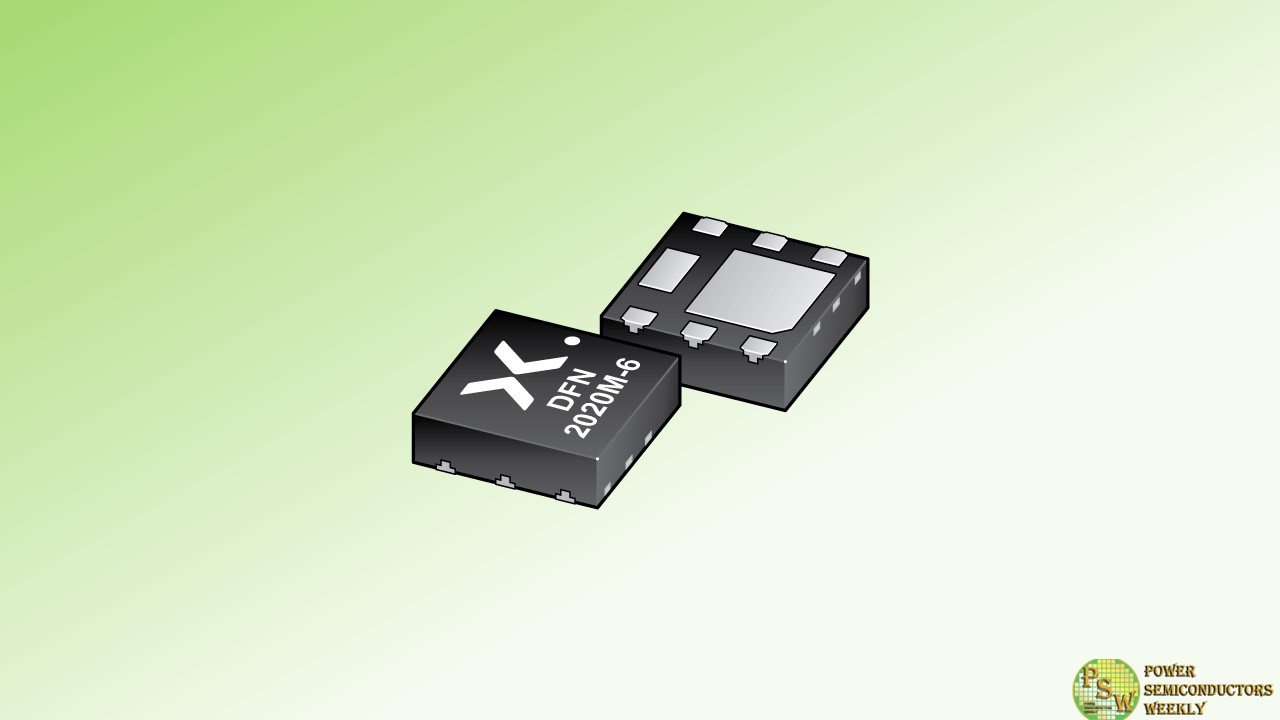
Nexperia is once again bringing its product innovations to APEC and today announced the release of several new MOSFETs to further broaden its range of discrete switching solutions for use in various applications across multiple end markets.
This release includes 100 V application specific MOSFETs (ASFETs) for PoE, eFuse and relay replacement in 60% smaller DFN2020 packaging, and 40 V NextPowerS3 MOSFETs with improved electromagnetic compatibility (EMC) performance.
PoE switches typically have up to 48 ports, each requiring 2 MOSFETs for protection. With up to 96 MOSFETs on a single PCB, any reduction in device footprint is attractive. For this reason, Nexperia has released 100 V PoE ASFETs in 2 mm x 2 mm DFN2020 packaging which occupies 60% less space than previous versions in LFPAK33 packaging.
A critical function of these devices is to protect PoE ports by limiting inrush currents while safely managing fault conditions. To manage this scenario, Nexperia has enhanced the safe operating area (SOA) of these devices by up to 3x with only a minimal increase in RDS(on). These ASFETs are also suitable for battery management, Wi-Fi hotspot, 5G picocell and CCTV applications and can serve as replacements for mechanical relays in smart thermostats, for example.
EMC-related issues caused by MOSFET switching usually only emerge late in the product development life cycle and resolving them can incur additional R&D costs and delay market release. Typical solutions include using significantly more expensive MOSFETs with lower RDS(on) (to slow down switching and absorb excessive voltage ringing) or to fit an external capacitive snubber circuit but this approach has the disadvantage of increasing component count.
Nexperia has optimized its 40 V NextPowerS3 MOSFETs to offer similar EMC performance as that which can be achieved using an external snubber circuit, while also offering higher efficiency. These MOSFETs are suitable for use in switching converters and motor controllers across various applications and are available in LFPAK56 packaging.
“By introducing these latest additions to our range of discrete FET solutions at APEC 2024, Nexperia showcases how we leverage our expertise in R&D to deliver optimized solutions. Both our new 100 V PoE ASFETs as well as improved EMC performance in our 40 V NextPowerS3 MOSFETs demonstrate our commitment to supporting engineers in overcoming challenges across diverse applications. These innovations underscore Nexperia’s dedication to providing efficient, compact, and reliable solutions that empower our customers to succeed in today’s ever-evolving market,” says Chris Boyce, MOSFET Marketing & Product Group Director at Nexperia.
Original – Nexperia
-
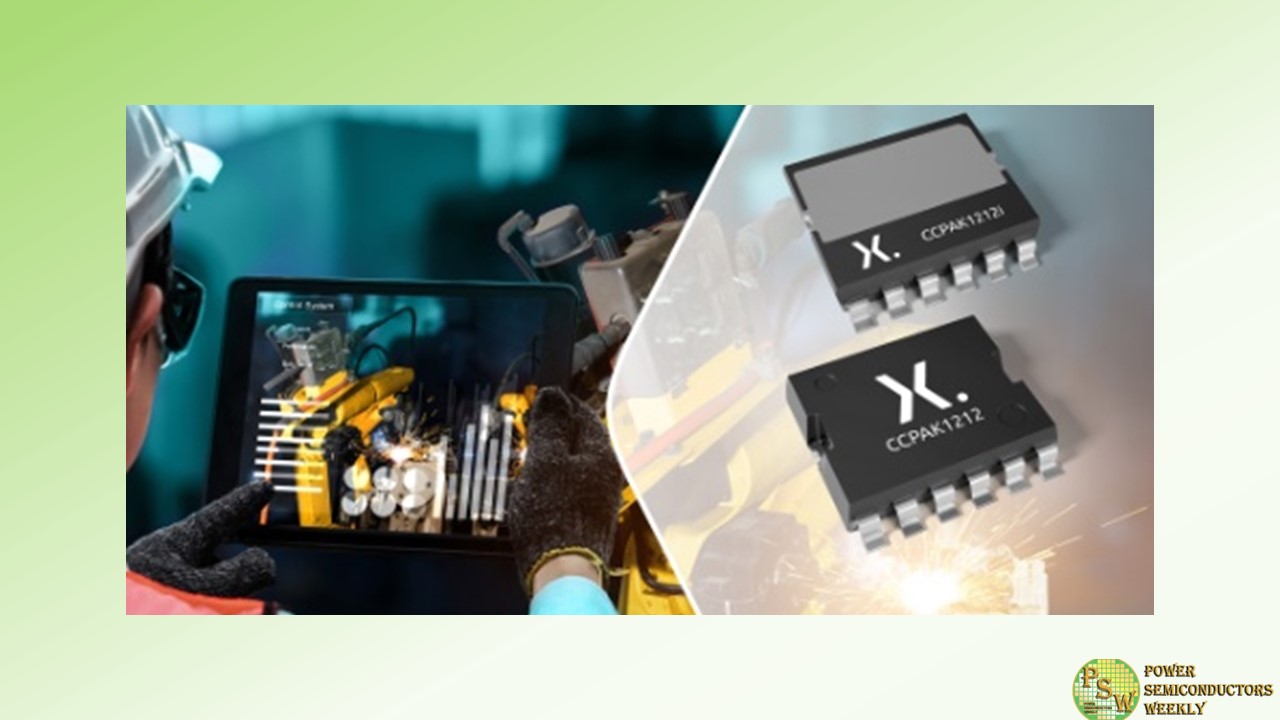
Nexperia announced that its GaN FET devices, featuring next-gen high-voltage GaN HEMT technology in proprietary copper-clip CCPAK surface mount packaging, are now available to designers of industrial and renewable energy applications.
Building on two decades of expertise in supplying high-volume, high-quality copper-clip SMD packaging, Nexperia is now proud to extend its revolutionary packaging approach to GaN cascode switches in CCPAK. The GAN039-650NTB, a 33 mΩ (typ.) Gallium Nitride (GaN) FET within the CCPAK1212i top-side cooling package, ushers in a new era of wide bandgap semiconductors and copper-clip packaging.
This technology offers advantages for renewable energy applications such as solar and residential heat pumps, further enhancing Nexperia’s commitment to developing the latest component technology for sustainable applications. It is also suited to a wide spectrum of industrial applications such as servo drives, switched-mode power supplies (SMPS), server, and telecom.
Nexperia’s CCPAK surface mount packaging uses Nexperia’s proven innovative copper-clip package technology to replace internal bond wires. This reduces parasitic losses, optimizes electrical and thermal performance, and improves device reliability. For maximum flexibility in designs, these CCPAK GaN FETs are available in top- or bottom-cooled configurations to further improve heat dissipation.
The cascode configuration of the GAN039-650NTB enables it to deliver superior switching and on-state performance, with a robust gate offering high margins against noise. This feature also simplifies application designs by eliminating the requirement for complex gate drivers and control circuitry, instead allowing them to be conveniently driven using standard silicon MOSFET drivers.
Nexperia’s GaN technology improves switching stability and helps to shrink die size by approximately 24%. In addition, device RDS(on) is reduced to only 33 mΩ (typ.) at 25°C, with a high threshold voltage and low diode forward voltage.
“Nexperia recognizes that designers of industrial and renewable energy equipment need a highly robust switching solution that can provide excellent thermal efficiency when performing power conversion.”, according to Carlos Castro, Vice President and General Manager of the GaN FET business at Nexperia. “This is why Nexperia decided to bring together the exceptional switching performance of its cascode GaN FETs with the exceptional thermal properties of its CCPAK packaging to offer customers a compelling solution.”
Nexperia begins its CCPAK portfolio release with the top-cooled 33 mΩ (typ.), 650 V GAN039-650NTB, and will follow shortly with the bottom-cooled variant, GAN039-650NBB of the same RDS(on). More information including datasheets and samples is available at www.nexperia.com/ccpak.
Original – Nexperia


