-

As expected, Siltronic AG’s business performance in Q2 2024 was again characterized by weak demand in the wafer market, which resulted from continued increased inventories in the chip industry. Due to the lower wafer area sold, half-year sales of EUR 694.8 million were significantly lower than in the same period of the previous year (H1 2023: EUR 808.2 million). However, at EUR 351.3 million, sales in Q2 2024 slightly exceeded the previous quarter (Q1 2024: EUR 343.5 million) by 2.3 percent.
“Q2 was in line with expectations. On a positive note, the end markets, partially driven by Artificial Intelligence, will grow this year. However, this is not yet reflected in our order situation due to still elevated inventory levels. We are pleased that we were able to slightly increase our sales in Q2 compared to the previous quarter and continued to achieve a solid EBITDA margin of 25.8 percent,” comments Dr. Michael Heckmeier, CEO of Siltronic, on the development.
Business development in H1 2024 influenced by weak demand, sales prices almost stable
In Q2 2024, Siltronic generated sales of EUR 351.3 million, up 2.3 percent on the previous quarter (Q1 2024: EUR 343.5 million) due to the increase in wafer area sold. Sales prices were almost unchanged quarter-on-quarter. Sales of EUR 694.8 million were generated in H1 2024 (H1 2023: EUR 808.2 million). The decline is primarily due to the lower sales volume. Price and currency effects had no significant impact in the half-year comparison.
On the cost side, the increase in wafer area sold and higher depreciation due to investments had a particularly noticeable impact on the quarter-on-quarter comparison. As expected, a small loss from currency hedging transactions was recognized in the other operating result in Q2.
As a result, EBITDA in Q2 2024 remained almost unchanged compared to the previous quarter at EUR 90.6 million (Q1 2024: EUR 90.8 million) despite a slight increase in sales. At 25.8 percent, the EBITDA margin remained at a solid level (Q1 2024: 26.4 percent). In a half-year comparison, EBITDA fell to EUR 181.4 million (H1 2023: EUR 243.8 million), mainly due to lower demand, and reached a margin of 26.1 percent (H1 2023: 30.2 percent).
The decline in costs due to the lower sales volume was mitigated by a lower fixed cost dilution, and a lower currency hedging result was also noticeable in the half-year comparison. In addition, H1 2024 saw an increase in depreciation and amortization.
Net profit for the period fell from EUR 27.7 million in Q1 2024 to EUR 22.4 million in Q2 and from EUR 133.9 million in H1 2023 to EUR 50.1 million in H1 2024. In addition to the effects described above, a lower financial result due to investments contributed to the reduction. Earnings per share amounted to EUR 0.73 in Q2 2024 and EUR 1.59 in H1 2024.
Net assets and financial position still affected by high investments
With an equity ratio of 46.5 percent as of June 30, 2024, Siltronic continues to have a good balance sheet quality (December 31, 2023: 46.6 percent). Cash and cash equivalents and short-term financial investments fell by EUR 129.5 million to EUR 327.4 million in H1 2024.
This was due to net payments for investments of EUR 411.2 million with a focus on the new 300 mm fab in Singapore and the dividend payment of EUR 36.0 million to Siltronic AG’s shareholders. In the same period, these payments were opposed by cash inflows of EUR 171.4 million from operating activities and cash inflows of EUR 150.0 million from a loan that was partially drawn.
Due to the high level of investments, the net cash flow fell to EUR -252.8 million and was negative, as expected. Accordingly, net financial debt increased by a total of EUR 283.5 million to EUR 639.2 million compared to December 31, 2023.
Guidance for 2024
The Executive Board of Siltronic AG has specified its guidance published at the end of April and now expects Group sales to decline by a high single-digit percentage compared to the previous year. With a view to the financial year 2024, this is primarily due to lower volumes as well as each slightly negative exchange rate- (EUR/USD 1.10), price- and product mix effects.
The EBITDA margin is expected to be at the upper end of the previously communicated range of 23 to 25 percent. However, the EBITDA margin in H2 will not reach the level of H1. Profitability in H2 will be impacted by both slightly negative price and product mix effects as well as ramp costs for the new Singapore fab, which will start to impact earnings in Q4.
In addition, one production line is scheduled for maintenance in Q4, which will be bridged by inventory reductions and will also have a negative impact on the margin. Capex is expected to be in the range of EUR 500 million to EUR 530 million, with depreciation and amortization below EUR 300 million.
Original – Siltronic
-
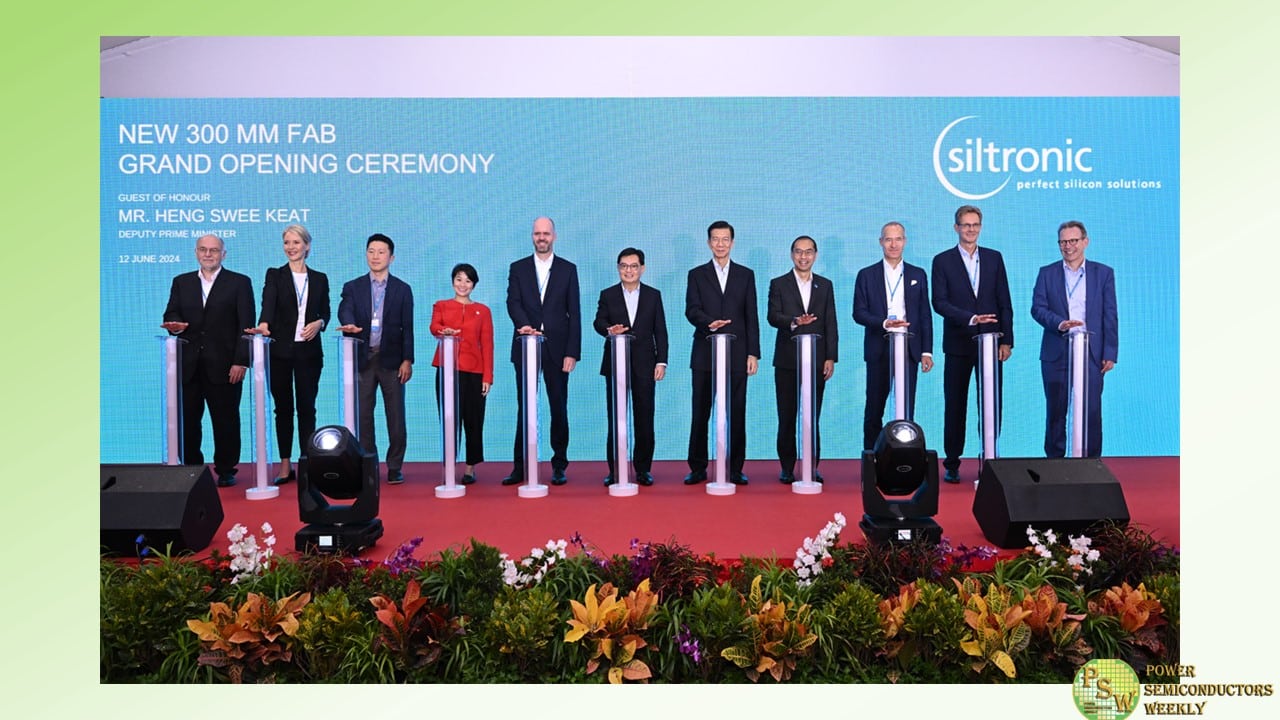
June 12 marked a milestone in the history of Siltronic AG: after more than 500 construction days and roughly 23 million working hours, Siltronic inaugurated one of the world’s most advanced wafer fabs. The inauguration of the new production facility, which is one of the most modern and cost-efficient of its kind, took place in Singapore.
The highly automated fab at JTC’s Tampines Wafer Fab Park was officially opened in the presence of around 150 guests, including numerous high-ranking representatives of the Singaporean government, customers and suppliers. Singapore’s Deputy Prime Minister Heng Swee Keat was the Guest of Honour to grace the occasion. The fab was commissioned at the beginning of 2024 and will now be ramped to full capacity over several years.
“With our new fab, we will accompany the future growth of the wafer industry for many years to come and take Siltronic to a new level. What the entire team, including all business partners, has achieved is a masterpiece, and I would like to thank everyone for their outstanding contribution,” said Dr. Michael Heckmeier, CEO of Siltronic AG, in his speech.
Ms. Jacqueline Poh, Managing Director of Singapore Economic Board (EDB) said: “We are proud of our long-standing partnership with Siltronic. As one of top 5 global wafer suppliers, Siltronic’s new fab is a significant expansion that not only supplies to Singapore’s semiconductor industry but also strengthens the resilience of the global semiconductor supply chain. This investment will create good jobs and further grow the existing collaboration that Siltronic has with local suppliers in automation and precision components.”
The success story of Siltronic in Singapore began in 1997 with the founding of Siltronic Singapore Pte. Ltd. in JTC’s Tampines Wafer Fab Park. The first 200 mm wafers were produced as early as 1999. This was followed in 2006 by the establishment of a joint venture with Samsung and the start of construction of the first 300 mm fab, from which the first wafers were delivered to customers in 2008. The foundation stone for the second 300 mm fab was laid in 2021, and it was officially opened today. Singapore is Siltronic’s largest production site.
Today’s inauguration of the state-of-the-art wafer fab in Singapore is not only the largest investment in Siltronic’s history, but also a milestone of which Siltronic is extremely proud. With its high level of automation and impressive efficiency, the fab sets new standards in our industry and strengthens Siltronic’s position as one of the world’s leading wafer manufacturers.
Original – Siltronic
-
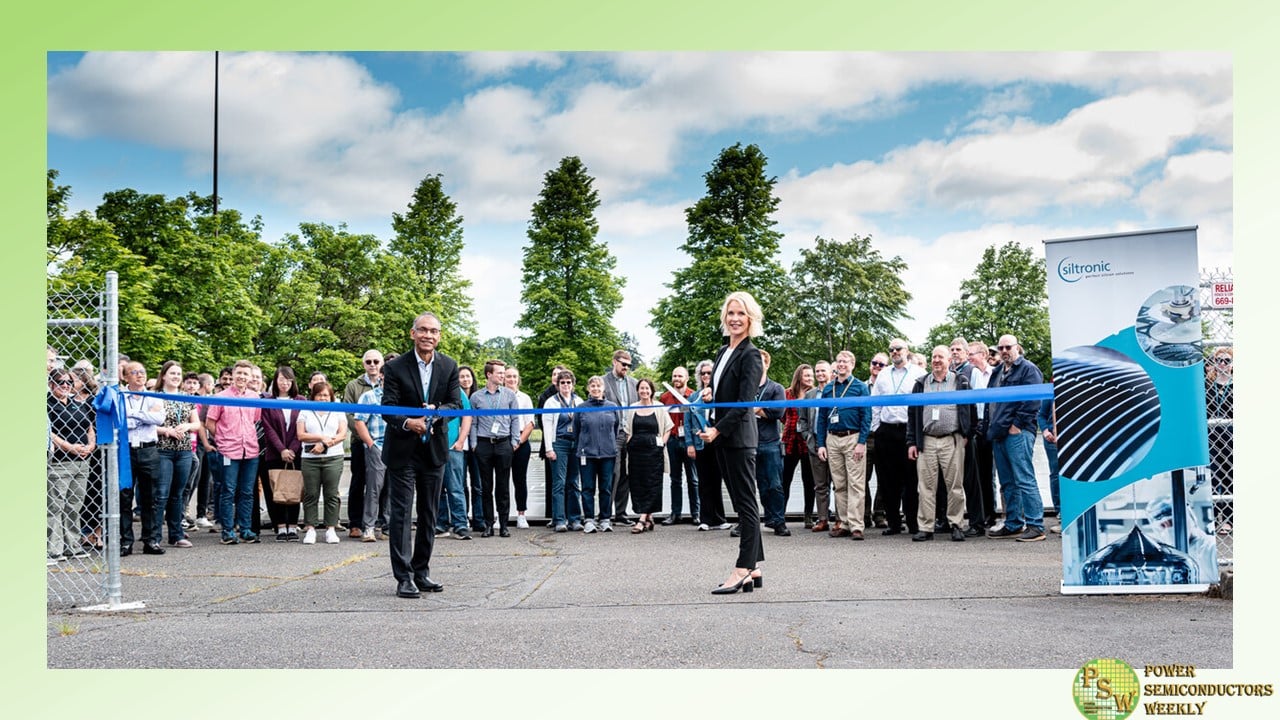
Siltronic Portland proudly announced the inauguration of its state-of-the-art solar field on May 16, 2024. This marks a milestone in the company’s commitment to sustainability and reducing its carbon footprint.
“We see sustainability not just as a duty, but as a deeply rooted conviction. It is our responsibility not only to ensure financial profits, but also to work for the sustainable development of Siltronic and the preservation of our environment for future generations. Our new solar field exemplifies our commitment to a greener and more sustainable future”, stated Claudia Schmitt, CFO of Siltronic.
Siltronic AG has implemented a climate action plan aimed at limiting global warming to 1.5 degrees Celsius, in line with the 2015 Paris Climate Agreement. The company intends to reduce its Scope 1 and 2 greenhouse gas emissions by 42 percent by 2030, using 2021 as the baseline. Additionally, Siltronic aims to achieve net zero emissions by 2045. To achieve these targets, Siltronic utilizes three main levels: enhancing energy efficiency, generating its own renewable energy, and purchasing renewable energy.
As part of the in-house generation of renewable energy, the solar field with a capacity of 1,500 MWh per year started generating electricity last week. The energy produced from this solar field could sustain almost 140 Oregon households for an entire year. It contains 2,353 panels mounted on a fixed ground mount system and spans an area of 420 feet by 250 feet. The ribbon-cutting ceremony was conducted by Claudia Schmitt, CFO of Siltronic, and Subramania Krishnakumar, President of the Portland Site.
Founded in 1978 as Wacker Siltronic Corporation, the Portland site serves as the first international location in Siltronic’s production network. In 1980, the site celebrated the inauguration of Fab 1 and commenced production of 100 mm wafers, followed by expansions to increase capacity and capability, including the addition of 150 mm wafers in the mid-1980s. In 1996, production began in Fab 2, specializing in 200 mm wafers. Throughout its history, the Portland site has received numerous awards for its dedication to efficiency and sustainability. Today, Siltronic Portland remains focused on manufacturing high-quality 200 mm wafers for customers worldwide. With approximately 400 employees, the site specializes in wafering production, offering a range of polished and epitaxial wafers.
Original – Siltronic
-

Siltronic AG continued to be affected by weak demand in Q1 2024 due to increased customer inventory levels, with sales declining nearly 4 percent compared to Q4 2023, primarily due to product mix shifts.
“The start of the year continues to be characterized by weak demand due to increased inventories at our customers. It is still not possible to predict when inventories will return to a normal level. Therefore, 2024 will probably be a transition year on the way to profitable growth,” comments Dr. Michael Heckmeier, CEO of Siltronic AG on the development.
Business Development in Q1 2024
Siltronic generated sales of EUR 343.5 million in Q1 2024, which corresponds to a decrease of 3.7 percent compared to Q4 2023. This development is in line with expectations. While the wafer area sold and sales prices remained nearly stable compared to the previous quarter, the product mix in particular had a slightly negative impact. The Euro/US dollar exchange rate, which averaged 1.09 in Q1 2024 (Q4 2023: 1.08), also impacted sales slightly on a quarterly basis.
Cost of sales decreased by 1.4 percent compared to the previous quarter and therefore could not be reduced at the same level as sales.
As a result, the gross profit in Q1 2024 decreased by EUR 9.1 million compared to the previous quarter. The gross margin decreased from 22.2 percent (Q4 2023) to 20.4 percent (Q1 2024).
The decrease in gross profit was largely offset by positive FX effects and lower selling, administration, and research and development expenses. The FX effects reported in the balance of other operating income and expenses amounted to EUR 5.4 million after EUR -0.8 million in Q4 2023.
EBITDA in Q1 2024 (EUR 90.8 million) was therefore on par with the previous quarter (Q4 2023: EUR 91.1 million). Due to the decline in sales, the EBITDA margin improved from 25.5 percent to 26.4 percent.
EBIT amounted to EUR 36.0 million in Q1 2024 compared to EUR 36.8 million in Q4 2023. The marginal decline is mainly due to a higher depreciation.
Despite continued weak demand, a EUR 27.7 million result for the period was achieved after EUR 32.3 million in the previous quarter. Of this amount, EUR 25.7 million is attributable to the shareholders of Siltronic AG, resulting in earnings per share of EUR 0.86.
Development of equity, net cash flow and net financial assets
With an equity of EUR 2,152.9 million as of March 31, 2024 and an equity ratio of 46.5 percent, Siltronic continues to have a solid balance sheet quality (December 31, 2023: 46.6 percent).
Loan liabilities increased by EUR 53.4 million, mainly due to the partial draw down of a loan. In addition, other provisions and liabilities increased by EUR 31.4 million, mainly due to an investment grant received.
The decrease in cash flow from operating activities compared to the previous quarter is mainly due to reporting date effects in the inflow of trade receivables. In Q4 2023, payments were received from customers shortly before the reporting date, and in Q1 2024 shortly after the reporting date.
In the quarter under review, Siltronic made net payments of EUR 198.7 million for capex including intangible assets. Due to the high capex at the end of 2023, some of which was not due for payment until 2024, capex payments significantly exceeded additions to the balance sheet in the quarter under review. The payments and balance sheet additions were mainly related to the new fab in Singapore.
Due to the change in working capital and the continued high level of investments, both the free cash flow of EUR -137.2 million and the net cash flow of EUR -158.4 million were negative in Q1 2024. As a result, cash and cash equivalents and financial investments decreased by EUR 88.9 million, while loan liabilities increased at the same time. Accordingly, net financial debt increased from EUR 355.7 million at the end of 2023 to EUR 501.0 million as of March 31, 2024.
Outlook: Mid-term targets for 2028 unchanged, 2024 will be a transition year
Driven by several megatrends, Siltronic expects a significant increase in demand in the medium and long term. However, the start to the 2024 financial year was subdued. Although demand for wafers is increasing in the end markets, Siltronic continues to face weak demand in the coming quarters. This is due to higher customer inventories and the associated further postponement of delivery volumes, which will now primarily affect the second half of the year. Customers’ persistently high inventories are recovering slower than originally expected. As a result, the impact of these elevated inventories is expected to be felt throughout 2024, although visibility remains limited.
In an ad hoc announcement on April 26, 2024, Siltronic therefore adjusted its forecast and expects Group sales to be roughly 10 percent below the previous year. This is mainly due to lower volumes and both slightly negative FX- (EUR/USD 1.10) and price effects. The EBITDA margin is forecast to be between 21 and 25 percent. Capital expenditure will decrease compared to the previous guidance and is expected to be slightly below EUR 550 million. Depreciation and amortization is expected to be below EUR 300 million.
Klaus Buchwald to be appointed Chief Operating Officer as early as June 1, 2024
Klaus Buchwald will take up his position as a new member of the Executive Board and Chief Operating Officer (COO) of Siltronic AG on June 1, 2024, two months earlier than originally announced. He will be responsible for Operations and Supply Chain, Engineering as well as IT.
Original – Siltronic
-

Siltronic AG plans to gradually cease production of polished and epitaxial small diameter wafers at its Burghausen site. The process, which excludes unpolished wafers, is set to be completed in the course of 2025.
Siltronic currently produces wafers with a diameter of 300 mm, 200 mm and wafers with smaller diameters (SD) of up to 150 mm. The SD wafer technology was developed primarily in the 1990s and earlier. The most significant technological breakthroughs in recent decades have been achieved with larger diameters, which also show the highest growth potential. An average volume growth of 6 percent per year is expected for 300 mm wafers.
“SD wafer production at Siltronic originated in Burghausen in 1968. It has contributed to our success for many years, thanks to the outstanding work of our employees. However, the wafer industry has evolved significantly due to structural changes and innovations. Demand has increasingly shifted to wafers with larger diameters and improved properties, while SD wafers are approaching the end of their life cycle. This has led to a notable decline in volumes, which recently had a negative impact on earnings. As this will likely continue to intensify in the coming years, we have decided, together with the Supervisory Board, to gradually reduce the production of small diameters and to cease it in the course of 2025,” comments Dr. Michael Heckmeier, CEO of Siltronic AG.
“Despite this decision the Burghausen site remains of crucial importance for Siltronic. Our global technology as well as research and development center, the production of 300 mm wafers and 200 mm hyperpure silicon ingots as well as a large part of our administrative functions are located here,” Michael Heckmeier continues.
Just 25 years ago, more than half of the silicon wafer market consisted of wafers with a diameter of up to 150 mm. Today, it is less than five percent, based on data published by the industry organization SEMI. This is the result of customers reducing or ceasing their production of small wafers due to the dynamic technological developments in the semiconductor industry. In addition, competition, particularly from China, is now clearly felt in the small diameters.
In the past financial year, SD wafers accounted for a single-digit percentage of the Group’s sales. The impact on earnings has already been clearly negative in recent months. Approximately 400 people are employed in the small diameters, about half of whom are on fixed-term and temporary contracts. The aim is to reduce the core workforce in a socially responsible manner through demographic change and partial retirement, and to avoid layoffs for operational reasons.
“Due to structural changes in the market, we assume that SD wafers will not recover and that their impact on earnings would be considerably negative in the coming years. We have therefore decided to take this difficult but necessary step. At the same time, our goal is to ensure that workforce reductions at Siltronic are socially responsible and no layoffs are made for operational reasons. After the end of the SD wafer production and the subsequent dismantling measures that may be necessary, our EBITDA margin will improve by around one to two percentage points in the medium term,” adds Claudia Schmitt, CFO of Siltronic AG.
Original – Siltronic
-

Siltronic AG closed the 2023 financial year with a solid performance despite difficult conditions, confirming the preliminary figures announced at the beginning of February. The company achieved sales of EUR 1,513.8 million (2022: EUR 1,805.3 million) and EBITDA of EUR 433.9 million (2022: adjusted EUR 621.6 million).
Thanks to stable sales prices, the EBITDA margin remained at a healthy level of 28.7 percent (2022: adjusted 34.4 percent). The declines are due to significantly weaker demand, mainly as a result of increased inventories in the value chain.
These will also characterize the financial year 2024. As a result, wafer demand is expected to remain weak, particularly in the first half of the year. Under these conditions, sales and EBITDA margin, before ramp cost, are expected to be in the region of the previous year. The ramp of the new 300 mm fab in Singapore will burden the margin by up to three percentage points compared to 2023.
“We continue to see strong growth for our wafer sales in the mid-term, driven by megatrends. However, 2023 and to some extent 2024 will be impacted by increased inventories in the value chain. The dynamic development of Artificial Intelligence will lead to significantly higher demand for wafers. Thanks to our new 300 mm fab in Singapore, we are prepared for this and expect sales to increase to more than EUR 2.2 billion and the EBITDA margin to rise to the high 30’s by 2028,” comments Dr. Michael Heckmeier, CEO of Siltronic AG.
Business development in 2023 – solid in a difficult environment
Group sales decreased by 16.1 percent to EUR 1,513.8 million in 2023 – the guidance was minus 15 to 17 percent. This was due to the lower wafer area sold. Average selling prices in euro remained stable compared to 2022.
Cost of sales decreased by 4.1 percent to EUR 1,141.6 million and therefore less than the decrease in sales. This was due to increased depreciation and amortization, higher cost, in particular for raw materials and supplies, and lower fixed cost dilution as a result of the lower wafer area sold. As a result, the gross margin declined from 34.1 percent to 24.6 percent.
In order to mitigate risks from exchange rate developments, Siltronic performs currency hedging measures, which resulted in a net income from exchange rate effects of EUR 16.5 million in 2023, after expenses of EUR 21.0 million in 2022.
In the reporting year, Siltronic generated an EBITDA of EUR 433.9 million (2022: EUR 671.6 million, adjusted EUR 621.6 million) and an EBITDA margin of 28.7 percent (2022: 37.2 percent, adjusted 34.4 percent) – the guidance was 28 to 30 percent. As with the gross margin, lower fix cost dilution and cost increases were the main reasons for the lower EBITDA margin. EBIT of EUR 231.3 million was also well below the previous year’s level (EUR 495.6 million, adjusted EUR 445.6 million) due to higher depreciation as a result of significantly higher investment activity.
The Group’s tax rate was 13 percent in the reporting year (2022: 11 percent), resulting in a net profit of EUR 201.3 million in 2023 (2022: EUR 434.4 million). Of this, EUR 184.4 million (previous year: EUR 390.6 million) are attributable to the shareholders of Siltronic AG. Earnings per share were EUR 6.15 compared to EUR 13.02 in 2022.
Net cash flow development characterized by high investments
In the past financial year, Siltronic made net payments of EUR 1,112.1 million for capex including intangible assets. These were primarily related to the construction of the new 300 mm fab in Singapore and the expansion of the crystal pulling hall in Freiberg. High payments could not be fully financed from cash flow from operating activities like in 2022. As a result, free cash flow decreased to EUR -624.2 million and net cash flow to EUR 663.5 million.
Statement of financial position remains healthy
As of December 31, 2023, total assets amounted to EUR 4,504.9 million (previous year: EUR 4,050.7 million) with a significant increase in property, plant and equipment. As planned, the high level of capex led to a significant decrease in cash and cash equivalents and financial investments.
Due to the negative free cash flow and the dividend of EUR 90.0 million paid in 2023, Siltronic had net financial debt of EUR 355.7 million as of December 31, 2023 (2022: net financial assets of EUR 373.6 million). As equity increased only slightly year-on-year, the equity ratio decreased to 46.6 percent, compared to 51.0 percent at the end of 2022.
Dividend proposal of EUR 1.20 per share for the financial year 2023
In view of the persistently difficult market situation, the Executive Board proposes to the Annual General Meeting on May 13, 2024, to pay a dividend of EUR 1.20 per share for the financial year 2023, corresponding to a payout ratio of approximately 20 percent of the consolidated net profit attributable to Siltronic shareholders.
This corresponds to a dividend payment of EUR 36.0 million. At the same time Siltronic confirms its dividend policy for the future, according to which approximately 40 percent of the consolidated net profit attributable to the shareholders of Siltronic AG, as determined in accordance with IFRS, will be distributed. The upper limit remains unchanged at EUR 3.00 per dividend-bearing share.
Outlook for 2024 characterized by weak demand, especially in the first half of the year
As a result of the continued weak demand for silicon wafers, the Executive Board expects sales in 2024 to be the region of the previous year. The first six months of 2024 are expected to be the most affected by delivery postponements, so that sales for this reporting period are expected to be at the level of the second half of 2023. The EBITDA margin, before ramp cost, will also be in the region of the previous year. Due to the ramp of the new 300 mm fab in Singapore the margin will be reduced by up to three percentage points compared to 2023. Ramp cost mainly comprise energy, material and labor costs.
The guidance is based on a EUR/US dollar exchange rate of 1.10. On a positive note, average selling prices are expected to remain stable. The Executive Board expects energy and material cost (before ramp cost) to be lower in 2024 than in the previous year. However, the positive effect will be compensated by rising labor tariffs and a lower result from currency hedging compared to the previous year. Due to the high level of capex in recent years, depreciation and amortization will almost double compared to 2023. As a result, EBIT will be significantly lower than last year.
Capex will decrease to below EUR 600 million compared to the record level of EUR 1,316 million in the previous year. As a result, the company expects a significant improvement in net cash flow, which will nevertheless remain significantly negative.
Growth targets until 2028 confirmed
The Executive Board confirms the mid-term targets for the period up to financial year 2028, as communicated in November 2023, which include a significant increase in sales to more than EUR 2.2 billion and an improvement in the EBITDA margin to the high 30’s. The targets are driven by the increasing relevance of global megatrends with a strong increase in demand for semiconductors and thus for wafers. The improvement in the Group’s profitability will primarily be driven by the expected volume growth and a higher cost efficiency.
Siltronic will use its expected future cash flows primarily for further organic growth, to strengthen its innovative strength and to reduce debt.
Original – Siltronic
-

Effective August 1, 2024, the Supervisory Board has appointed Klaus Buchwald to the Executive Board of Siltronic AG. The 55-year-old will assume the position of Chief Operating Officer (COO).
In his role, Mr. Buchwald will be primarily responsible for Operations and Supply Chain, Engineering and IT. Siltronic’s Executive Board will thus be expanded to three members. Furthermore, the existing division of responsibilities between CEO Dr. Michael Heckmeier and CFO Claudia Schmitt will remain unchanged. Klaus Buchwald has initially been appointed for three years.
“We are convinced that Mr. Buchwald’s expertise, particularily in the areas of production, logistics and supply chain, as well as his in-depth knowledge of the semiconductor industry and its value chain, make him the ideal candidate for the new COO position on the Siltronic Executive Board,” says Dr. Tobias Ohler, Chairman of the Supervisory Board of Siltronic AG. “Together with Mr. Heckmeier and Ms. Schmitt, Mr. Buchwald will contribute to the realisation of the ambitions and to the further profitable growth of Siltronic,” Dr. Ohler continued.
The company aims to achieve sales of more than EUR 2.2 billion and an EBITDA margin in the high 30 percent range by 2028. These targets are to be achieved by expanding production capacities with the new fab in Singapore, a stronger focus on technology leadership, the Power segment as well as increasing cost efficiency, among other things.
Klaus Buchwald
Klaus Buchwald, who studied mechanical and industrial engineering, was born in 1968. He worked for Infineon for more than 21 years, most recently as Senior Vice President Operations of the “Green Industrial Power” division and as Executive Vice President Corporate Supply Chain. Prior to this, he held various management positions at the DAX listed company and spent four years as Head of Supply Chain at the technology group Rohde & Schwarz. He started his career at a renowned management consultancy firm.
Original – Siltronic
-

Siltronic AG has published its forecast for the financial year 2024 in an ad-hoc announcement. Due to the weakness in demand, as a result of elevated customer inventories and the associated further postponement of delivery volumes, the Executive Board expects sales for the current financial year to be in the region of the previous year.
The first six months of the financial year 2024 are likely to be affected most by the postponement of delivery volumes, meaning that sales for this reporting period are expected to be at the level of H2 2023. The forecast is based on a Euro/US Dollar exchange rate of 1.10. On a positive note, average selling prices are expected to remain stable.
The EBITDA margin, before ramp costs, will also be in the region of the previous year. Due to the commissioning of our new state-of-the-art 300 mm fab in Singapore, the margin will be reduced by up to three percentage points compared to the previous year. Ramp costs primarily comprise energy, material and labor costs.
“Our strategic growth targets until 2028 remain unchanged. In the short-term, however, the continuing weakness in demand will weigh on the development in the financial year 2024. In addition, the expected ramp costs for our new 300 mm fab in Singapore will become noticeable. With the increase in production volume over the next few years, the fab will contribute significantly to the profitable growth of Siltronic. Therefore, we stick to our medium-term ambition and expect sales to grow to more than EUR 2.2 billion and an EBITDA margin in the high 30’s until 2028,” commented Dr. Michael Heckmeier, CEO of Siltronic AG.
The Executive Board expects a noticeable reduction in energy and material costs (before ramp costs) in 2024 compared to the previous year. However, the positive effect will roughly be compensated by rising labor tariffs and the lower currency hedging result compared to the previous year. The high level of capital expenditure in recent years will almost double depreciation and amortization compared to the previous year. As a result, the EBIT will be significantly lower than in the previous year.
As already announced, capital expenditure will be more than halved compared to the previous year’s record level of EUR 1,316 million. Therefore, the company expects a significant improvement in net cash flow, although it will still remain significantly negative.
Growth targets until 2028 remain unchanged
As communicated in November 2023, significant sales growth to more than EUR 2.2 billion and an improvement of the EBITDA margin to the high 30’s are expected until 2028. This confidence is driven by the increasing relevance of global megatrends such as artificial intelligence, digitalization and electromobility and will lead to a sharp rise in demand for semiconductors and therefore also for wafers. The increase in Group profitability will be primarily driven by expected volume growth and higher cost efficiency, which will be significantly above the expected inflation-related cost increases.
Future use of funds with focus on growth, innovation and debt reduction –
Dividend proposal of EUR 1.20 for 2023 due to persistent weakness in demandSiltronic will use the cash flows generated as a result of the above mentioned targets primarily for further organic growth, strengthening its innovative power and reducing debt. The latter had increased noticeably due to the high level of capital expenditure in the recent past. Nevertheless, Siltronic shareholders will continue to participate in the company’s success through a dividend. In view of the current difficult market situation, the Executive Board will propose to the Annual General Meeting on May 13, 2024 the payment of a dividend of EUR 1.20 per share for the financial year 2023 and thus a payout ratio of around 20 percent of the Group profit attributable to Siltronic shareholders.
“As a company in a capital-intensive and cyclical industry, we know how important a solid balance sheet policy and a forward-looking liquidity management are. That is why we will put an even stronger focus on our costs and capex this year. In view of the upcoming refinancing needs, we are convinced that our dividend proposal of EUR 1.20 represents an appropriate balance between capital discipline on the one hand and dividend continuity for our shareholders on the other,” explains Claudia Schmitt, CFO of Siltronic AG.
Despite this noticeable reduction compared to the previous year, Siltronic confirms its dividend policy for the future, according to which around 40 percent of the Group profit determined in accordance with IFRS principles, attributable to the shareholders of Siltronic AG, will be distributed. The upper limit remains unchanged at EUR 3.00 per dividend-bearing share.
Original – Siltronic
-

Siltronic AG has achieved its annual targets for 2023 according to preliminary, unaudited figures. The company achieved preliminary sales of EUR 1,514 million, a decrease of approximately 16 percent compared to the record sales of EUR 1,805 million in 2022. The target for the year was a decline in sales of 15 to 17 percent.
The main reason for the year-on-year decline was significantly weaker demand from the semiconductor industry due to increased inventories in the value chain. Since Siltronic nevertheless succeeded to keep sales prices stable, a preliminary EBITDA of EUR 434 million was achieved in 2023, resulting in a continued solid EBITDA margin of 29 percent. This was also within the expected target range of 28 to 30 percent.
The EBITDA for the record year 2022 amounted to EUR 672 million, though it should be noted that this included a one-off compensation payment of EUR 50 million as a result of the failed tender offer by GlobalWafers. The adjusted comparative figure for the EBITDA margin in 2022 was therefore 34.4 percent.
“We achieved our 2023 targets in a challenging environment. In particular, the EBITDA margin of 29 percent is very solid given the sharp decline in sales. The year 2023 was also marked by the construction of our new 300 mm fab in Singapore, which is on schedule to start operations at the beginning of 2024. The new state-of-the-art fab will contribute to Siltronic’s significant profitable growth in the medium and long term,” commented Dr. Michael Heckmeier, CEO of Siltronic AG.
Compared to the previous year, cost of sales decreased at a slower rate than sales due to a reduction in fixed costs, higher depreciation and inflationary cost increases, particularly for raw materials, supplies and labor.
Preliminary earnings before interest and taxes (EBIT) were also significantly lower than in the previous year at EUR 231 million (2022: EUR 496 million, adjusted: EUR 446 million). Accordingly, the preliminary EBIT margin was 15 percent compared to an adjusted 24.7 percent in 2022.
Solid financial situation despite record investments
In the reporting year, Siltronic made record investments in property, plant and equipment and intangible assets of preliminary EUR 1,316 million (2022: EUR 1,074 million). This was mainly due to the new 300 mm wafer fab in Singapore and the expansion of the crystal pulling hall in Freiberg.
Considering the high future investments mentioned above, the preliminary net cash flow of EUR -664 million in 2023 is in line with expectations (2022: EUR -395 million). The high cash payments for capex and the dividend payment of EUR 90 million resulted in net financial debt of EUR 356 million by December 31, 2023 (2022: net financial assets of EUR 374 million).
Business development in Q4 2023
As announced, preliminary sales of EUR 357 million in Q4 2023 were slightly above the level of Q3 2023 (EUR 349 million). As expected, at a preliminary EUR 91 million, the EBITDA for Q4 2023 did not reach the level of the previous quarter (EUR 99 million), mainly due to a lower foreign exchange result, which is included in the balance of other operating income and expenses.
The preliminary quarterly EBIT amounted to EUR 37 million (Q3 2023: EUR 46 million). The EBIT margin reached 10 percent (Q3 2023: 13.3 percent). Despite increased investments, the preliminary net cash flow for Q4 2023 improved significantly to EUR -32 million (Q3 2023: EUR -215 million). This was mainly due to investment grants received in Q4 2023 and positive working capital effects.
Upcoming events
The audited financial results and the Annual Report 2023 will be published on March 12, 2024. On this day, the Management Board of Siltronic AG will hold a conference call with analysts and investors (in English only) at 10:00 am (CET). This call will be streamed over the Internet. The audio webcast will be available live and on demand on Siltronic’s website.
- March 12, 2024 Publication of the Annual Report 2023
- May 2, 2024 Quarterly Statement Q1 2024
- May 13, 2024 Annual General Meeting
- July 25, 2024 Half Year Report 2024
- October 24, 2024 Quarterly Statement Q3 2024
Original – Siltronic
-

Due to the positive development of the market capitalization, the Siltronic share is rejoining the MDAX index today. After several months in the SDAX, the Siltronic AG share is once again represented in the second most important index of the German stock exchange. Additionally, Siltronic shares will remain part of the TecDAX.
Throughout the year, Siltronic’s share price was negatively impacted by the market weakness in the semiconductor industry, which led to its descent to the SDAX in June 2023. Since then, the share price has steadily recovered, and the company’s market capitalization has increased significantly.
Dr. Michael Heckmeier, CEO of Siltronic, commented on this development: “The re-inclusion of Siltronic in the MDAX reflects investors’ confidence in our future prospects and our continued growth. This underscores the robust share price performance of recent months.”
Siltronic’s inclusion in the MDAX is part of Deutsche Börse AG’s regular quarterly review. The decision is based on the market capitalization of the freely tradable shares, i.e. the free float market capitalization.
Original – Siltronic


